Strength desk
Published 11 July 2026
Strength that supports the life around training.
Explore technique, progressive loading, unilateral work and the patience required to build capacity after 35.

Useful principles
Control
Choose a range and tempo that lets you repeat sound movement.
Progression
Change one variable at a time and give adaptation enough time.
Recovery
Pair demanding work with sleep, food and easier movement.
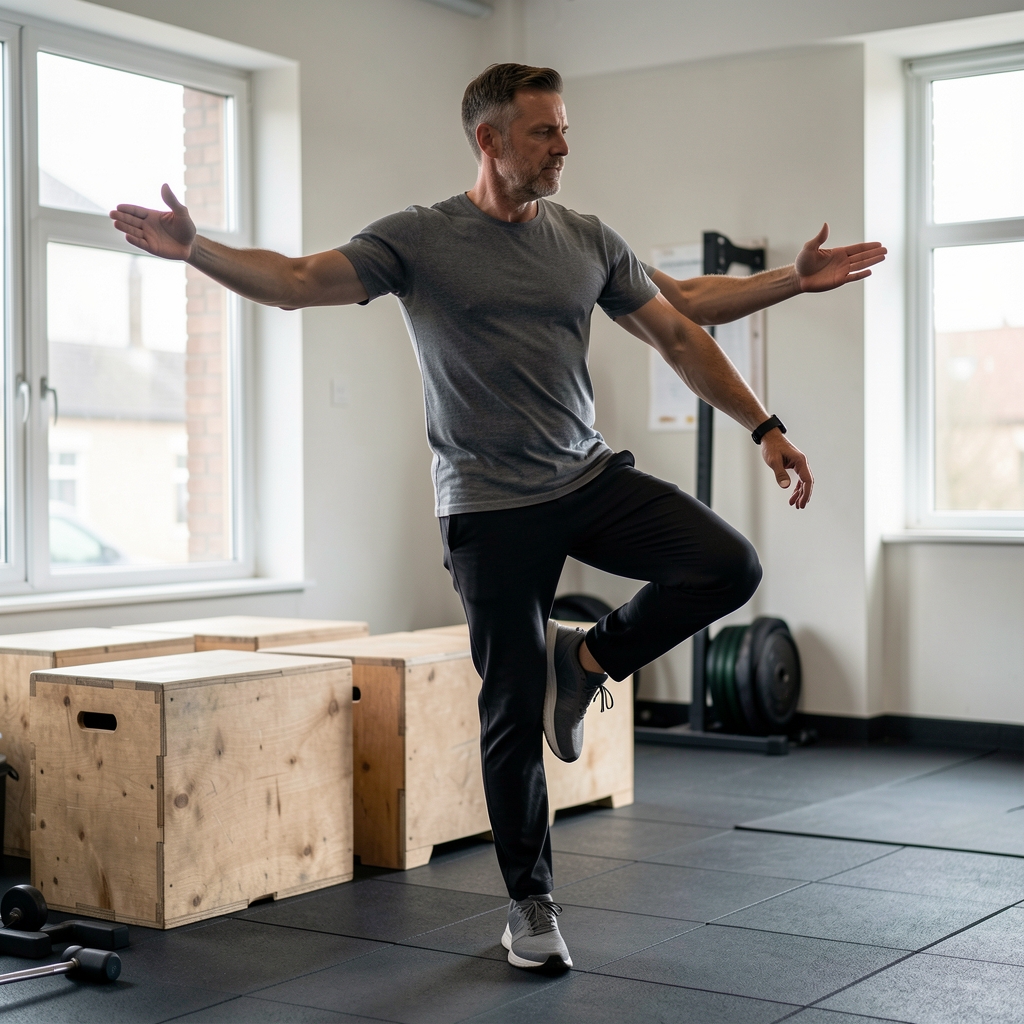
Quality is a measurable outcome
Record how a movement feels, not only the load. Pain, instability or persistent symptoms warrant qualified assessment rather than a more aggressive programme.
Send an editorial question →Strength is more than a load
Strength practice includes coordination, position, intent, breathing, recovery and the ability to repeat a movement with attention. After 35, training history often matters as much as the number on a bar. A useful plan respects what has been practised and what has not.
| Variable | Question | What to record |
|---|---|---|
| Technique | Can the movement stay consistent? | Range, tempo and control |
| Load | Is the demand appropriate today? | Effort and next-day response |
| Volume | Can the work be recovered from? | Sets, repetitions and weekly rhythm |
Before changing a programme
- Check whether the current movement is understood.
- Change one variable rather than increasing everything.
- Leave room for work, travel, sleep and other activity.
- Use pain, instability or persistent symptoms as reasons to seek qualified assessment.
- Choose the movement and purpose.
- Set a manageable starting demand.
- Repeat with consistent technique.
- Review the response before progressing.
Progress can be quiet
“A stable repetition, a clearer setup or a better recovery day can be meaningful training information.”
Strength writing should leave space for individual history. It should not turn a single load, image or performance into a universal standard.